
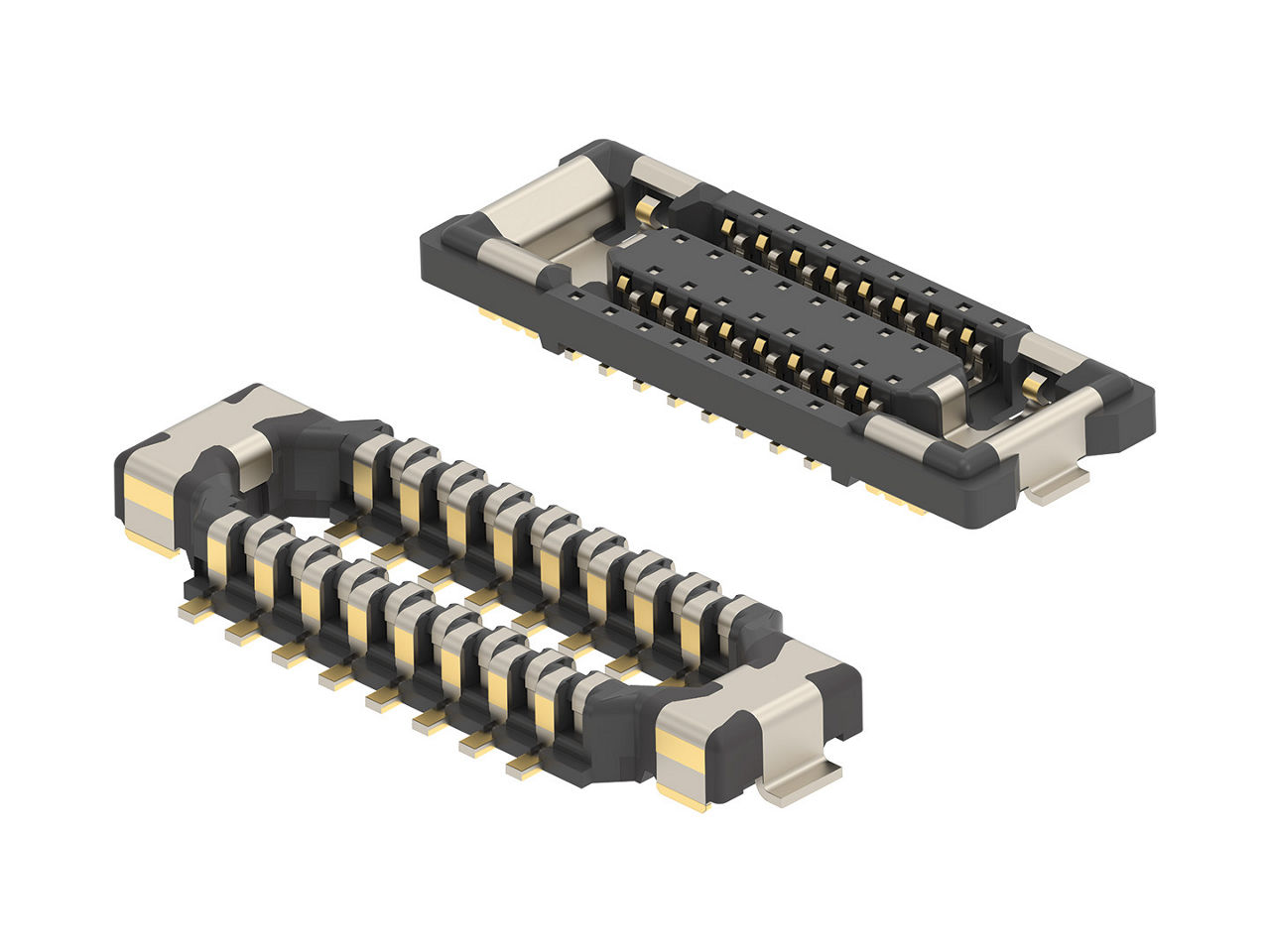
Modern electronic devices are becoming smaller, faster, and more sophisticated, creating a growing need for reliable methods of connecting printed circuit boards. Among the most important components used for this purpose are board-to-board connectors. These specialized components establish electrical and mechanical connections between two or more PCBs while supporting compact layouts, efficient assembly, and dependable signal transmission.
From consumer electronics and telecommunications equipment to automotive systems, industrial controls, medical devices, and computing hardware, board-to-board connectors provide engineers with flexible options for designing interconnected circuit assemblies. Choosing the right connector requires consideration of electrical performance, mechanical requirements, environmental conditions, and manufacturing needs.
What Are Board-to-Board Connectors?
Board-to-board connectors are electromechanical components designed to connect one printed circuit board directly to another without requiring traditional wires or cables between them. They generally consist of mating components mounted onto separate PCBs. When the boards are positioned together, the connector contacts mate and create an electrical path.
Depending on the application, boards may be arranged parallel, perpendicular, or at another angle. This flexibility makes board-to-board connection technology particularly valuable when designers need to maximize available space inside an electronic enclosure.
These connectors can carry power, control signals, high-speed data, or combinations of different electrical circuits. Their construction may include housings made from high-temperature engineering plastics and contacts manufactured from conductive metal alloys with suitable plating.
Why Board-to-Board Connections Matter
PCB architecture has a major influence on the overall size, performance, reliability, and serviceability of an electronic product. Instead of connecting multiple boards with loose wiring, designers can use board-to-board connectors to create a structured interconnection system.
One major advantage is space efficiency. Direct PCB connections can reduce the amount of cable routing required inside a product. This can be especially important for smartphones, networking equipment, embedded computers, industrial controllers, and compact consumer electronics.
Another benefit is simplified assembly. Connectors can be mounted during PCB production, allowing boards to be joined during final assembly with fewer individual wiring operations. This may improve manufacturing consistency and reduce opportunities for assembly errors.
They can also support modular designs. Separate circuit boards can be dedicated to power management, processing, communication, sensing, or control functions and then interconnected through appropriate connector systems.
Common Types of Board-to-Board Connectors
There are several connector configurations available, each designed for specific mechanical and electrical requirements.
Mezzanine connectors are commonly used when two PCBs need to be positioned parallel to one another. They are widely used in computing, telecommunications, industrial electronics, and other applications where multiple circuit boards must occupy a compact vertical space.
Right-angle connectors are suitable when one PCB needs to connect to another at approximately 90 degrees. This configuration can simplify enclosure layouts and allow designers to arrange circuit boards efficiently.
Stacking connectors provide a defined separation between parallel PCBs. Different stack heights can be selected depending on the components and routing requirements of the assembly.
Edge connectors use contacts positioned along the edge of a PCB and can provide a convenient mating interface. They are frequently used in modular electronics where one board needs to be inserted into another assembly.
High-density versions are designed for applications where a large number of electrical contacts must fit into a small footprint. These connectors are particularly useful in advanced computing, communication, instrumentation, and compact electronic systems.
Key Electrical Considerations
Electrical performance should be one of the first factors considered when selecting board-to-board connectors. The connector must support the required voltage, current, and signal characteristics of the application.
Contact resistance is important because excessive resistance can contribute to voltage drops and heat generation. For power applications, engineers should verify that the connector’s current rating provides sufficient operating margin.
Signal integrity becomes increasingly important in high-speed systems. Data rates used in modern computing and communication equipment can make connector geometry, impedance control, contact design, and crosstalk significant considerations.
For high-frequency applications, designers should evaluate insertion loss, return loss, impedance characteristics, and electromagnetic performance. A connector that works well for low-speed control signals may not be suitable for high-speed data transmission.
Mechanical Design and Reliability
A connector is only useful when it can maintain a dependable connection throughout the expected operating life of the product. Mechanical characteristics therefore deserve careful attention.
Mating force should be appropriate for the intended assembly process. Excessive force can complicate manufacturing, while insufficient force may lead to poor engagement or instability.
Retention features help prevent accidental separation. Depending on the application, connectors may incorporate locking mechanisms, guide posts, alignment features, or other structural elements.
Durability is another important factor. If a product requires repeated assembly and disassembly, the connector should be designed for the expected number of mating cycles. For permanently assembled products, other factors such as vibration resistance and structural stability may be more important.
Material and Environmental Requirements
The operating environment can significantly influence connector selection. Electronics exposed to elevated temperatures, humidity, vibration, dust, chemicals, or mechanical shock require connector materials and designs capable of handling those conditions.
Contact plating is particularly important because it can influence conductivity, corrosion resistance, and long-term reliability. Different plating options may be selected according to electrical requirements, environmental exposure, and expected mating cycles.
Housing materials should also withstand the temperatures generated by nearby components and manufacturing processes. For products assembled using modern soldering techniques, high-temperature resistance may be essential.
Automotive, industrial, and outdoor electronics often require additional consideration because environmental conditions can be considerably more demanding than those found in ordinary indoor consumer products.
Applications Across Modern Industries
The versatility of board-to-board connectors allows them to appear in a wide range of products.
In consumer electronics, they can connect display boards, processing modules, control boards, and other compact PCB assemblies. Their small form factor helps manufacturers create thinner and more integrated devices.
Telecommunications equipment uses high-density connector systems to interconnect processing, networking, and communication modules. Signal integrity and reliable high-speed transmission are often key requirements.
Industrial automation systems can use board-level connectors to connect control electronics, sensor interfaces, power modules, and communication boards. Robust mechanical construction can be particularly valuable in industrial environments.
Automotive electronics also benefit from structured PCB interconnection. Control units, infotainment systems, sensing modules, and other electronic assemblies can require compact and dependable connections capable of handling demanding operating conditions.
Medical equipment, measurement instruments, servers, and embedded computing systems represent additional areas where these connectors can support modular electronic architecture.
Selecting the Right Connector
Choosing board-to-board connectors should begin with a clear understanding of the application’s requirements. Engineers should evaluate the number of contacts, pitch, current rating, voltage rating, mating orientation, board spacing, signal speed, and available PCB area.
Mechanical factors such as connector height, mating cycles, retention, alignment, and vibration resistance should also be reviewed. Environmental requirements should then be considered, including temperature range, humidity, corrosion exposure, and mechanical stress.
Manufacturing requirements are equally important. The connector should be compatible with the PCB assembly process and provide practical tolerances for production. Consistent quality and availability should also be considered when developing products for large-scale manufacturing.
Future Trends in PCB Interconnection
The demand for smaller and more powerful electronic products continues to influence connector development. Future board-to-board connectors are likely to focus on higher density, smaller pitches, improved signal integrity, and stronger mechanical performance.
As data-intensive applications continue expanding, high-speed connector technologies will become increasingly important. At the same time, miniaturization will encourage manufacturers to develop solutions that provide more contacts without significantly increasing PCB space requirements.
Designers will also continue seeking connectors that support modular architectures and efficient automated manufacturing. This combination of compact dimensions, reliable performance, and manufacturing flexibility makes board-to-board connection technology an important part of modern electronics engineering.
Conclusion
Board-to-board connectors provide an efficient way to establish reliable electrical connections between printed circuit boards while supporting compact, modular, and high-performance electronic designs. From consumer devices and communication systems to industrial automation and automotive electronics, they help engineers optimize space, simplify assembly, and create flexible PCB architectures.
By carefully evaluating electrical specifications, mechanical characteristics, materials, environmental conditions, and manufacturing requirements, designers can select connector solutions that deliver dependable performance throughout the product’s expected service life.